


Hi there! Have you noticed that your skin feels thinner, drier, or less firm during perimenopause or menopause? You’re not alone: and you don’t have to navigate your options on your own.
Menopause can bring noticeable changes in skin texture, elasticity, hydration, and facial volume. The good news is that professionally guided skin rejuvenation can help support smoother, firmer, healthier-looking skin while preserving your natural appearance.
But what is the best skin tightening treatment for menopause? The most accurate answer is: there is no single best treatment for everyone. The right approach depends on your skin quality, degree of laxity, skin tone, goals, medical history, budget, and preferred level of downtime.
Menopause Changes Skin From the Inside Out
As estrogen levels fluctuate and decline during perimenopause and menopause, the skin may produce less collagen and retain less moisture. Collagen provides structure and firmness, while elastin helps skin stretch and return to its original shape.
You may begin to notice:
- Looser skin around the cheeks, jawline, or neck
- Fine lines and deeper wrinkles
- Crepey texture, especially on the neck and décolleté
- Increased dryness or sensitivity
- Dullness and uneven tone
- Reduced facial fullness or a more tired appearance
- Slower recovery after irritation or environmental stress
These changes are normal, but they can affect how you feel about your appearance. A personalized plan can address both the visible signs of aging and the overall quality of the skin.
According to the American Academy of Dermatology, a supportive menopausal skincare routine should include gentle cleansing, regular moisturizing, and daily broad-spectrum sun protection. In-office treatments may complement these foundations by targeting collagen, texture, hydration, or facial structure.
The Best Treatment Depends on Your Main Concern
Before choosing a procedure, it helps to identify what you want to improve.
Are you most concerned about:
- Mild looseness or early crepiness?
- Fine lines and uneven texture?
- A softer jawline or less defined facial contour?
- Loss of facial volume?
- Dry, dull, or depleted-looking skin?
- A desire for improvement with minimal downtime?
Skin tightening is not one-size-fits-all. Some treatments are designed primarily to improve surface texture. Others support collagen deeper within the skin, while certain injectables address gradual structural changes.
A consultation helps determine whether one treatment: or a carefully sequenced combination: best matches your needs.
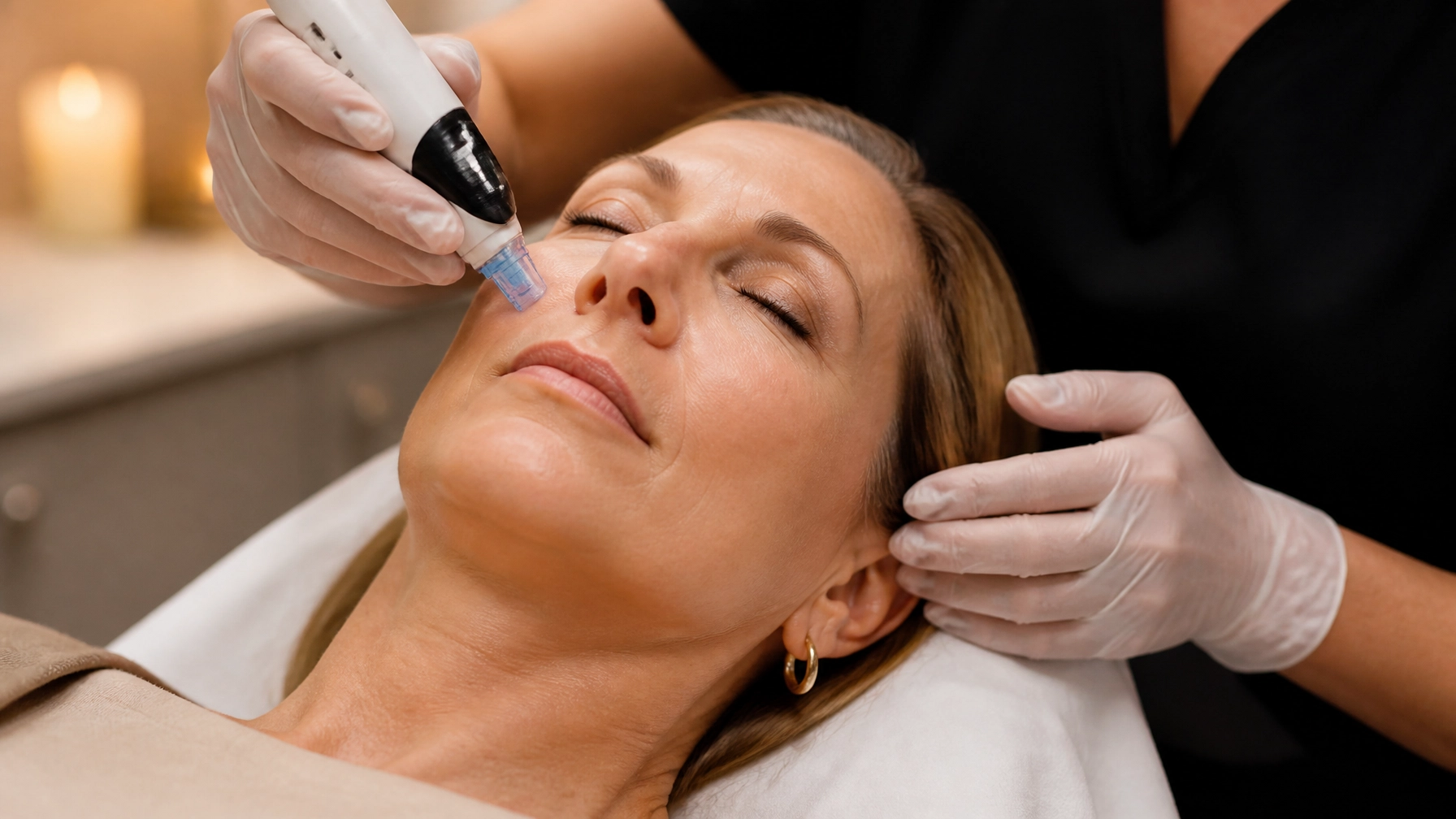
Microneedling and RF Options Support Skin Renewal
When menopause-related skin changes include fine lines, rough texture, enlarged pores, early crepiness, or mild loss of firmness, collagen-focused treatments are often part of the conversation.
Traditional microneedling uses fine, sterile needles to create controlled micro-injuries in the skin. This process supports the skin’s natural repair response and may help improve:
- Fine lines
- Uneven texture
- The look of acne scarring or surface irregularity
- Dullness and uneven tone
- Early signs of reduced firmness
Microneedling may be a good fit if your main goals are smoother texture, better product absorption, and gradual skin-quality improvement with relatively minimal downtime. Many patients notice temporary redness or sensitivity for a day or two, although recovery can vary.
For patients with more noticeable laxity or who want texture improvement plus deeper collagen remodeling, RF Microneedling may be more relevant. This treatment combines microneedling with radiofrequency energy to support skin tightening, texture refinement, and gradual rejuvenation. At Luminex, it is positioned for concerns such as:
- Mild-to-moderate skin laxity
- Wrinkles and fine lines
- Uneven texture
- Acne scars or textural irregularities
- Overall firmness and tone
Luminex also offers Vivace RF Microneedling, an FDA-cleared RF microneedling platform used to improve texture, elasticity, pore appearance, tone, and firmness with customizable settings. Vivace may appeal to patients who want a more advanced, low-downtime option for collagen stimulation and skin refinement. Mild redness or tightness for 1 to 2 days is common, but exact downtime depends on settings and individual skin response.
Traditional microneedling, RF microneedling, and Vivace RF are not interchangeable. The right choice depends on the degree of skin laxity, the depth of textural change, your skin tone, your tolerance for downtime, and your provider’s assessment.
Biostimulatory and Lifting Treatments Address Collagen Loss and Volume Loss
Menopausal skin changes are not always limited to the surface. A reduction in collagen, elasticity, and facial fullness can affect the cheeks, temples, jawline, lower face, and overall facial support.
Sculptra is a biostimulatory injectable made with poly-L-lactic acid. Rather than acting like a traditional filler that creates immediate volume in a specific spot, it is designed to stimulate your body’s own collagen gradually over time. At Luminex, Sculptra may be considered when the priority is:
- Collagen support
- Gradual improvement in facial structure
- Natural-looking fullness
- A more refreshed appearance
- Longer-term improvement in skin support
Sculptra is not a surgical facelift, and it does not remove excess skin. It may be more appropriate when collagen depletion, diffuse volume loss, or reduced structural support is a larger concern than isolated lines alone. Results develop gradually and vary from patient to patient. Multiple treatments may be recommended.
For patients who want more immediate contouring or targeted volume correction, dermal fillers may help restore fullness to areas such as the cheeks, lips, around the mouth, or other facial contours. Fillers are often used to address:
- Volume loss
- Softened facial contours
- Nasolabial folds or marionette lines
- Loss of cheek support
- A tired or less refreshed appearance
A broader Liquid Face Lift uses strategically placed filler to restore volume, soften folds, and create a subtle, non-surgical lift. This can be especially relevant when menopause-related changes include midface flattening, under-eye hollowness, or reduced definition along the jawline. Results are often seen sooner than with biostimulatory treatments, but bruising, swelling, and longevity vary based on product choice and individual metabolism.
For patients whose main concern is tissue descent or a softer jawline rather than volume loss alone, PDO Threads may be part of the discussion. PDO threads are dissolvable threads placed to provide a subtle lift and stimulate collagen over time. They may be considered for:
- Mild-to-moderate facial sagging
- Reduced jawline definition
- Cheek or lower-face laxity
- Early jowling
- Patients seeking a non-surgical lifting option
PDO threads can create an earlier visible lifting effect than collagen-only treatments, but they are still not a substitute for surgery when laxity is advanced.
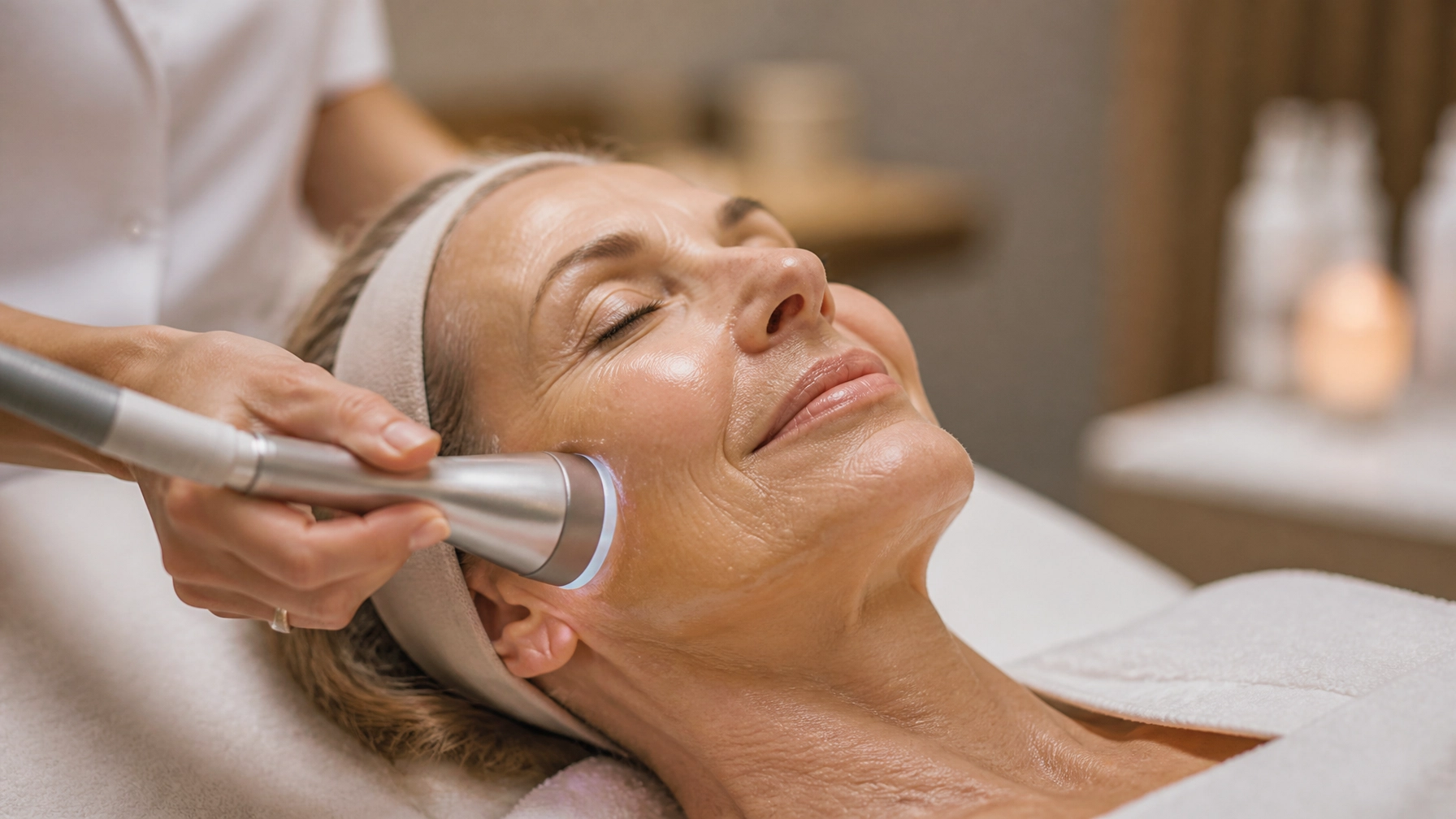
Opus Plasma and Combination Plans Expand the Options
When texture, fine lines, tone, and skin-tightening goals overlap, a resurfacing treatment may be worth considering. Opus Plasma is Luminex’s precision RF resurfacing option. It uses fractional radiofrequency plasma technology and may be recommended for concerns such as:
- Fine lines and wrinkles
- Uneven texture
- Sun damage
- Crepey-looking skin
- Tone irregularity
- Mild overall skin looseness on the face, neck, or chest
Because Opus Plasma is a resurfacing treatment, it is often discussed when surface aging and textural change are major concerns. Downtime is usually different from injectables or standard facials, and the right settings depend on your skin type, pigment history, goals, and provider evaluation.
In some cases, the most balanced menopause skin-firmness plan is not a single treatment but a curated series. Luminex’s combination plans naturally fit this approach:
- Radiance Reset — a shorter rejuvenation plan designed to improve brightness, texture, and overall skin renewal; helpful when dullness, uneven texture, and early firmness changes overlap.
- Signature Lift & Brighten — combines lifting and brightening strategies for patients who want contour support plus tone and radiance improvement.
- The Restored Grace Signature Protocol — a longer plan that may combine PDO threads, RF microneedling, injectables, and skin-refining treatments for gradual lift, texture support, and natural-looking restoration.
- The Elegant Lift — a more extended non-surgical rejuvenation plan centered on lift, firmness, volume restoration, resurfacing, and maintenance over time.
- Timeless Radiance Renewal — designed for gradual, natural-looking improvement in firmness, texture, volume, and radiance, often with a mix of injectables, RF microneedling, resurfacing, and home care.
These plans can be useful when menopause-related changes involve several layers at once: laxity, crepiness, textural change, pigment, and volume loss. They also reinforce an important point: a thoughtful combination approach often creates more balanced results than chasing one “strongest” treatment.
Supportive Skin Maintenance Still Matters
Sometimes menopausal skin needs more than tightening alone. Dryness, dullness, uneven tone, and rough texture can make the face look less radiant even when laxity is mild.
Supportive treatments at Luminex include Hydrofacial and the Signature Glow Facial. These options may help support:
- Hydration
- Smoother-feeling texture
- Clearer-looking pores
- Improved radiance
- Ongoing maintenance between higher-intensity treatments
It is important to keep expectations clear: Hydrofacial and facial treatments are not primary skin-tightening procedures. They are best viewed as supportive options for hydration, skin comfort, texture maintenance, and glow.
A professionally guided SoMe medical-strength skincare regimen can also play an important role. Medical-grade cleansers, serums, moisturizers, retinoid-based products, antioxidants, and sunscreen may help maintain treatment results, support skin barrier function, improve texture and brightness, and address common concerns such as dryness, pigmentation, and visible aging. Skincare alone does not replace procedures when laxity or volume loss is more advanced, but it often supports better long-term maintenance.
Treatment Selection Should Be Personalized
The “strongest” treatment is not automatically the safest or most appropriate treatment. The best plan depends on:
- The degree of skin laxity
- Texture and pore concerns
- Volume loss and facial structure
- Skin tone and pigment history
- Medical history and current medications
- Tolerance for redness, swelling, or downtime
- Budget and maintenance preferences
- Your provider’s hands-on assessment
That is why menopause skin rejuvenation should always begin with an individualized consultation rather than a one-size-fits-all recommendation.
Skin Tone and Safety Matter
Menopausal skin may be more fragile, dry, or reactive than it was previously. That makes careful evaluation especially important.
During a consultation, be prepared to discuss:
- Your natural skin tone and history of discoloration
- Any active skin conditions or recent sun exposure
- Medications and supplements
- Previous cosmetic treatments
- Hormonal symptoms or changes
- Your tolerance for redness, swelling, or downtime
- The degree of improvement you hope to see
If you have a deeper skin tone or a tendency toward hyperpigmentation, ask specifically about pigment-related risks and how the treatment will be adjusted for your skin. A qualified professional should explain both benefits and limitations clearly.
A Natural-Looking Plan Often Works Best
Menopausal skin rejuvenation is usually most successful when it is approached as an ongoing plan rather than a single dramatic procedure.
Your plan may include:
- A consistent medical-grade skincare routine with hydration, barrier support, and daily SPF
- A texture-focused treatment, such as microneedling, RF Microneedling, Vivace RF Microneedling, or Opus Plasma, when appropriate
- A collagen-supporting or lifting treatment, such as Sculptra, PDO Threads, dermal fillers, or a Liquid Face Lift, if facial structure or volume loss is a concern
- A combination program such as Radiance Reset, Signature Lift & Brighten, The Restored Grace Signature Protocol, The Elegant Lift, or Timeless Radiance Renewal when multiple concerns overlap
- Supportive maintenance care such as Hydrofacial, the Signature Glow Facial, and SoMe medical-strength skincare
At Luminex, our approach is centered on education, comfort, and intentional recommendations. Treatment selection depends on skin laxity, texture, volume loss, skin tone, medical history, downtime preferences, and provider assessment. We also provide primary care and health consultations, so concerns related to menopause and skin changes can be discussed as part of a broader wellness conversation. Aesthetic treatments do not replace medical treatment for menopause symptoms.

Frequently Asked Questions
Is skin tightening safe during menopause?
Many skin-tightening and skin-rejuvenation treatments may be appropriate during menopause, but suitability depends on your health, medications, skin condition, and treatment goals. A consultation is the safest place to begin.
What is the best treatment for loose skin on the neck?
The best option depends on whether the concern is dryness, crepiness, fine lines, texture changes, or more significant laxity. Depending on your exam and goals, options may include RF Microneedling, Vivace RF Microneedling, Opus Plasma, traditional microneedling, or a broader treatment plan. The right recommendation should be based on your skin quality, skin tone, downtime preferences, and provider assessment.
Does microneedling tighten menopausal skin?
Microneedling may help improve the appearance of mild laxity, fine lines, and crepey texture by supporting collagen and elastin production. For patients who need more tightening support, RF Microneedling or Vivace RF Microneedling may be more appropriate, depending on the provider’s evaluation. None of these treatments are intended to remove significant excess skin.
How long do results take?
Results vary. Some treatments may create an early refreshed appearance, while collagen-stimulating procedures develop gradually over several weeks or months. Your provider can explain the expected timeline for your selected treatment.
Discover Your Personalized Skin Rejuvenation Plan
There is no single best skin tightening treatment for menopause. The right choice is the one that fits your skin, your goals, your comfort level, and your expectations.
If you are searching for skin rejuvenation in Miami or Doral, Luminex Wellness & Aesthetics can help you explore a curated range of professional options: from microneedling, RF Microneedling, Vivace RF Microneedling, and Opus Plasma to Sculptra, PDO Threads, dermal fillers, and personalized combination plans.
Schedule a personalized consultation and take the next step toward skin that looks refreshed, supported, and naturally your own.
This article is for educational purposes only and is not medical advice. Individual results and treatment recommendations vary. Not every treatment is appropriate for every patient, and no aesthetic procedure can guarantee a specific outcome. A qualified healthcare professional should evaluate your personal health and skin concerns before treatment.